About IDE
Germany: We are a team from the areas of special education & German language and linguistics at the University of Education Freiburg and from the special school for Deaf and hard-of-hearing pupils, BBZ Stegen.
Ireland: The team has experience in Deaf studies, sign linguistics, deaf education, special education and sign language interpreting. Irish colleagues are based at the Centre for Deaf studies (School of Linguistic, Speech and Communication Sciences) and from the School of Education at Trinity College Dublin, and at the Holy Family School for the Deaf, Dublin.
Norway: Our team consists of members from the Norwegian University of Science and Technology; the Department of Teacher Education and the Department of Sign Language Interpreter Education, and from Early Childhood Education at Queen Maud’s University College Trondheim.
Belgium: Our team within the European Union of the Deaf represents the perspective of Deaf communities and bringing expertise in communication, equality legislation, language policy and lived cultural and linguistic experience of Deaf signing people.
Meet the team
Get to know our international team of dedicated partners

PH Freiburg
The University of Education Freiburg is situated in the south of Germany, close to the Black Forest. It provides study programs in education with a strong focus on teacher training. It engages in research with international cooperations and offers a full range of degrees: Bachelor programs, Master programs, Doctorate & Habilitation possibilities. In 2023 the new Institute of Special Education was founded. At the Institute of Special Education, they teach, learn, and research with the aim of designing equal participatory educational processes for all children, adolescents, and young adults in different educational settings. They specialize in fostering Learning, Emotional-Social Development, Mental Development, as well as Language & Communication.
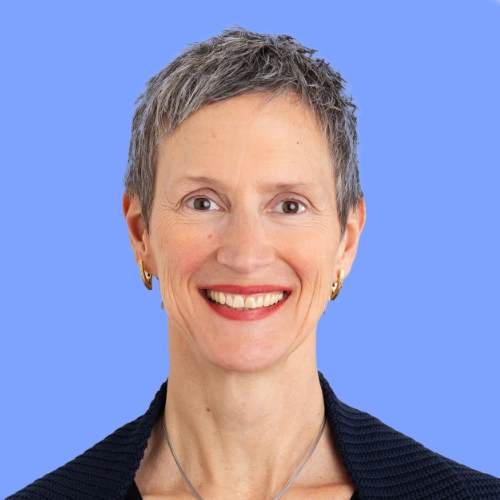
Vera Kolbe
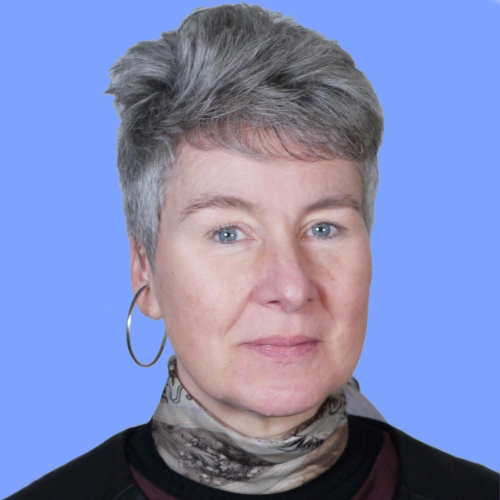
Petra Gretsch
Friederike Lau
I am a special education teacher for Deaf children. I have worked in schools for Deaf children, as well as in primary and vocational schools in inclusive settings including assistance, teaching, organisation and interpreting. I am currently working as the project assistant of the IDE project at the University of Education in Freiburg. My tasks include project organisation, communication, planning and research.
BBZ Stegen
The BBZ Stegen is an interregional state special education and counseling center with a boarding school, specializing in the focus area of hearing impairment. For over 50 years, BBZ Stegen has been offering deaf and hard-of-hearing children and adolescents a general education, while simultaneously providing a hearing-specific education with central educational qualifications, as well as various counseling services in the context of hearing. In addition to the main location in the municipality of Stegen (district of Breisgau-Hochschwarzwald), there are additional satellite locations that provide locally accessible educational and counseling services. They offer all the possible school qualifications available in Germany at their institution. Their offerings start with the school kindergarten, continue through elementary school, and then progress to the secondary school level, up to the high school diploma (Abitur).
Martin Stuecker
I am the head of the department for primary education as well as the head of the media counselling center. In the IDE project we produce creative and aesthetic videos visualizing our project outcomes in order to develop material for the IDE project website.
Stefan Poessiger
I am working at the BBZ Stegen in different areas. I am a teacher in our department for secondary education and a consultant in mainstream schools in the field of inclusion with deaf or hard of hearing pupils. I also work as an interpreter for German Sign Language at school celebrations or events. Last but not least I am in the team of the media counselling center, where we create videos in sign language, produce subtitles and give trainings. We also develop and design videos for the IDE project.
Lester Flamm
I have been working at the BBZ Stegen for many years in the department for primary education, and in various other areas. I work as a mobile advisor and supporter for pupils in inclusive mainstream schools. I also work in the media counseling center, where we produce sign language videos and offer trainings. My work at the BBZ Stegen is very interesting and varied, in general related to sign language. I am hard of hearing and grew up using spoken language, and I am also fluent in German sign language. I have contributed to the development of an educational plan for German Sign Language within the Ministry of Education in Baden-Württemberg.
European Union of the Deaf
Based in Brussels and operating at the European level, EUD represents deaf sign language users in all 27 EU Member States, plus Iceland, Norway, Switzerland and the United Kingdom. EUD has the sole mandate of the National Associations of the Deaf to work towards a more socially cohesive, sustainable, and accessible Europe for deaf citizens realising their inherent human rights. EUD aims to achieve equality in public and private life for deaf people all over Europe to ensure they can become full citizens. Its main objectives are the recognition of the right to use an indigenous sign language, empowerment through communication and information, and equality in education and employment.
Davy Van Landuyt
I am the Project Manager at the EUD. As a deaf Belgian, my roots lie in the social-cultural movement and association work in the deaf community, on all layers from the local level to the European level. In 2020 I obtained my certification as Specialist in Spanish Sign Language from the Fundación CNSE, which qualifies me to teach Spanish Sign Language and to work as a deaf role model with deaf children in Spanish schools. Since 2021 I work in the project team at the EUD, where I am involved in various EUD projects. In these projects, I focus on co-creation with deaf communities, accessibility issues, project management, science communication and dissemination.
Rehana Omardeen
I am a Project Officer at EUD. I have a background in academic research, and hold a PhD in sign language linguistics from the University of Göttingen. Since 2022 I have been a Project Officer at EUD, involved in the activities of project teams (including H2020, Erasmus+ and European Parliament projects). To these projects, I bring research, reporting and project management skills, with a focus on collaboration allowing for meaningful exchange between deaf communities and project partners.
David Hay
I am the EUD Communication and Media Manager since 2013. I oversee all press releases, articles, social media content, and website updates related to EUD. My work includes producing a wide variety of media outputs, such as video statements, animated content, and live social media updates. I have been instrumental in growing EUD’s social media presence, which now enjoys a large and engaged follower field. Before joining EUD, I worked as a Researcher/Director for the BBC and Channel Four, where I developed stories within the Deaf community, liaised with contributors, and organised production shoots.
Jenny Nilsson
I am a Project Officer at EUD. I have a background in human rights and hold a master’s degree in human rights. Prior to joining EUD, I worked across EU, UN, national authorities and civil society contexts, with a particular focus on the participation of children and youth with disabilities in education and rights-based settings. Since 2026 I have been a Project Officer at EUD involved in the activities of project teams across EU-funded initiatives. To these projects I bring stakeholder engagement, international coordination, and project management skills, with a focus on rights-based approaches that support deaf-led advocacy and participation across Europe.

Trinity College Dublin
Trinity College Dublin is Ireland’s oldest university and our project team comes from the Centre for Deaf Studies in the School of Linguistic, Speech and Communication Sciences, and from the School of Education. The Centre for Deaf Studies offers multidisciplinary programmes in Irish Sign Language, Deaf Studies, ISL teaching and ISL/English interpreting and supports students from undergraduate to PhD level and offers regular continuing professional development opportunities. The School of Education delivers a comprehensive range of undergraduate and postgraduate programmes. High-quality Initial Teacher Education (ITE) programmes provide inquiry-based learning opportunities for students entering post-primary teaching. These courses are complemented by the provision of similar programmes for early childhood and primary teachers in the Marino Institute of Education, reflecting a close strategic partnership between both institutions. The School also has a rich tradition of providing continuing professional development to teachers at all stages in their professional careers.
Lorraine Leeson
Professor in Deaf Studies at the School of Linguistic, Speech and Communication Science’s Centre for Deaf Studies and Associate Vice Provost for Equality, Diversity and Inclusion, leading Trinity College Dublin’s work in this area. I previously served as Director of the Centre for Deaf Studies (2001-2018). My research work is multidisciplinary, influenced by my background in deaf studies, interpreting studies, gender studies and linguistics. I have published widely in these areas.
Emily Barnes
Emily Barnes is Assistant Professor in Language Education in Trinity College Dublin. Her PhD was in the area of early literacy assessment for Irish-English bilinguals, and she is currently involved in the development of Geabaire, an Augmentative and Alternative Communication (AAC) system for autistic children in Irish-medium education. She is the co-ordinator of the Master’s in Irish-Medium and Gaeltacht Education.
Martina Farren
Senan Dunne
Holy Family School for the Deaf
Holy Family School for the Deaf, Cabra is a centre of excellence for deaf education and is the only campus in Ireland catering for deaf pupils from age 3 to 18. Holy Family School for the Deaf Cabra welcomes deaf and hard of hearing pupils from age 3 to 18. The school campus includes Early Intervention, full Primary and Post Primary curricula as well as Further Education programmes. Separate Boarding residences are available for girls and boys. Teachers and staff engage with each pupil using assistive technology and the students preferred communication methods including speech, Irish Sign Language and signed English to promote speech and learning. A wide range of activities are available to pupils including sports, arts and culture, IT and music.
Eimar O’Rourke
Shirley Higgins
I have been involved in Deaf education for 28 years, currently teaching Home Economics, Science, and Irish Sign Language at Holy Family School for the Deaf. I work with deaf students ranging from 12 months to 19 years of age, tailoring my teaching to meet their diverse learning needs. As a member of the ISL Expert Group, I contribute to the development of an Irish Sign Language curriculum for primary and post-primary schools in Ireland. I am deeply passionate about how deaf students learn, recognizing that their learning styles evolve throughout their lives. One of my key interests is teaching deaf children through music, using alternative approaches to support learning. This method not only enhances students’ confidence but also promotes their social and emotional development. My ultimate goal is to empower students to become independent members of society with their own voice—a goal that I believe this project will strongly support for deaf learners.
Aideen Lynch
I am a teacher of Science, Maths, ICT, and Biology at Holy Family School for the Deaf in Cabra. I have been teaching Deaf students for 26 years. I studied science at NUI Maynooth and obtained a Higher Diploma for Teachers of the Deaf at the University of Birmingham. I am part of a team developing ISL (Irish Sign Language) signs for science and technology subjects.
Kevin Dudley
I am a Primary School Teacher and this is my third year of teaching. I graduated from Dublin City University, DCU, with First Class Honours and I was awarded the DCU Chancellor’s Medal in recognition of my academic and extracurricular achievements which is my proudest achievement to date. I am a big lover of sports, particularly soccer. I have competed in the Deaflympics and Deaf European Championships while playing for the Irish Deaf Men’s Football Team, representing Ireland. By using technological devices into my teaching methods, I strive to enhance my students’ motivation/engagement and learning in the classroom. I recently joined the Erasmus team and am eager to learn how I can successfully use Erasmus’ experience to upskill my teaching skills.

Norwegian University of Science and Technology
The Department of Teacher Education at NTNU is dedicated to preparing future educators through innovative, research-based programs. It offers undergraduate and postgraduate degrees in primary, secondary, and special education, emphasizing inclusive practices and lifelong learning. Students engage in both theoretical coursework and practical teaching experiences in diverse school settings. Faculty members are experts in pedagogy, curriculum development, and educational leadership, fostering a collaborative and reflective learning environment. The department promotes digital literacy, sustainability, and equity in education. Partnerships with local schools and international institutions support student development and global perspectives. Graduates are equipped with the skills, knowledge, and values needed to inspire and support learners of all backgrounds. With a strong commitment to excellence, the Department of Teacher Education plays a vital role in shaping the future of education.
Sigrid Slettebakk Berge
Hello. My name is Sigrid Slettebakk Berge. This is my office. I work at NTNU, University of Trondheim, Department of Teacher Education. I am a professor of pedagogy. I teach students who want to work in schools as teachers. Students are different; some want to teach in first grade, in middle school, or in upper secondary school. I teach pedagogy and special education. It is a broad subject area and covers many topics. My core competencies are teaching deaf and hard-of-hearing students, and blind and visually impaired students. Previously, I taught sign language and interpreting students. I have previously conducted research on interpreted mediated teaching in upper secondary school. I have a degree as an interpreter, and I have experience from interpreting, both in primary school, upper secondary school, at university and other educational situations. I am hearing.
Marianne Pilskog Nyhus
Hello. My name is Marianne Pilskog Nyhus. I am an assistant professor NTNU, Faculty of Humanities, Department of Language and Literature, Section for Sign Language and Interpreting. I am currently the program manager in the section. I am teaching students who want to learn Norwegian Sign Language (part-time or full-time students), primary teacher students in sign language didactic, interpreting students. I also teach students who are continuing their teacher education with NSL. My own education is preschool teacher (BA), and special need pedagogy (MA/Hovedfag). I have personal experience with losing my hearing as a young adult, learning Norwegian Sign Language, participation in interpreted mediated interactions in my education, in work related meetings, and while teaching my students.

Queen Maud's College of Early Childhood Education
DMMH – Queen Maud University College of Early Childhood Education, is a university college in Norway dedicated to the education of kindergarten teachers. At DMMH, you find approximately 1,000 students and 180 employees. We actively work to protect children’s needs and rights, as well as to highlight children’s perspectives in society. The college offers several master programs, among them a program for special education.
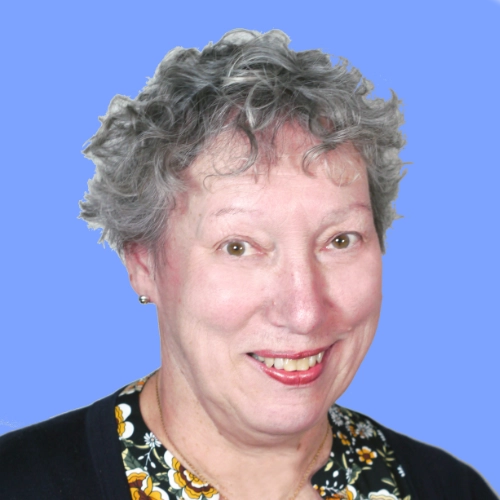
Eli Raanes